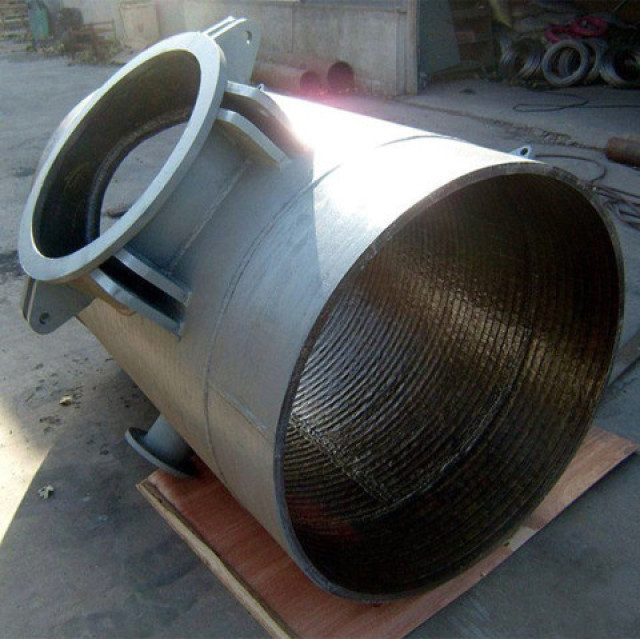
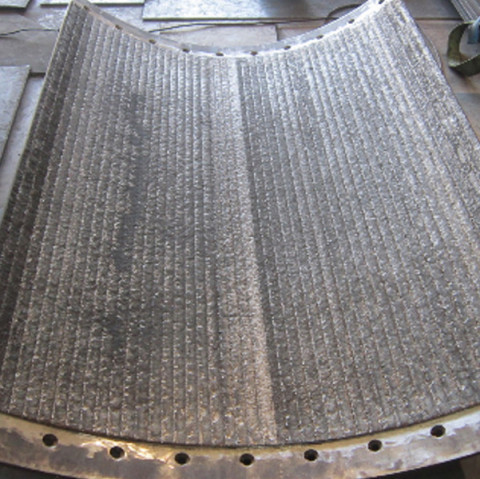
TECHPIPE bimetallic pipe
TECHPIPE®- Product type
- Pipes and liners
- Max. service temperature
- 550 °C
- Overlay hardness
- 60 ± 5 HRC
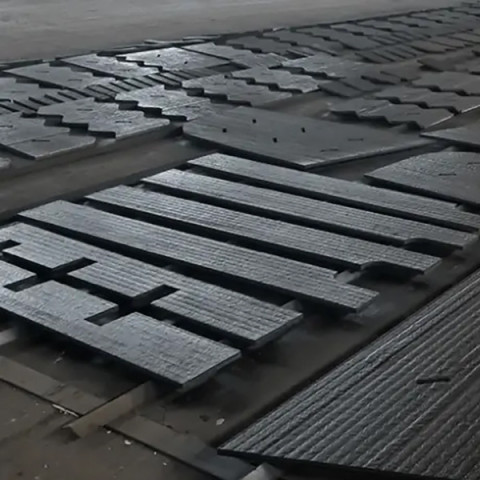
Wear plates with a steel base and a hardfaced layer. Cutting and rolling to drawings; linings for crushers, mills, conveyors and feeders.
| Material | Bimetal |
|---|---|
| Product type | Plates and tiles |
| For equipment | Mills and crushers |
| Protects against | Abrasion, Impact |
| Overlay type | CrC: abrasion, erosion, deformation, B: strength and wear resistance, Nb: fine particles at high velocity, Mo, V: critical temperatures |
| Base material | Steel base with a hardfaced wear layer |
| Manufacturing method | Cutting and rolling to customer drawings |
| Overlay hardness, HRC | 51–58metallographic tests of overlay samples |
|---|
A bimetallic plate consists of a steel base and a hardfaced wear layer. The base takes impact loads and allows the plate to be cut, rolled and welded, while the overlay resists abrasion and erosion.
We choose the overlay composition by the dominant type of wear:
What matters is the carbide content of the overlay; hardness is not the deciding factor. According to the metallographic study, an overlay with more than 30 % chromium and more than 4 % carbon performs best under abrasive wear. The tested samples ranged from 51 to 58 HRC.
We make parts to customer drawings: plates are cut and rolled for a specific unit.