ULTRAMIX
Chemically Resistant High-Temperature Adhesive Compound ULTRAMIX MX
ULTRAMIX MX is a two-component silicate-based adhesive for laying acid-resistant bricks and tiles, sealing joints and lining industrial floors and channels.
- Material
- Adhesives and compounds
- Base
- Silicate
- System
- Two-component
- Max. service temperature
- 900 °C
Specifications
| Material | Adhesives and compounds |
|---|---|
| Base | Silicate |
| System | Two-component |
| Purpose | Chemical protection, Laying wear-resistant linings |
| Protects against | Chemical attack, High temperature, Abrasion |
| Max. service temperature, °C | 900 |
|---|---|
| Density, g/cm³ | 2 |
| Compressive strength, MPa | Min. 15 |
| Modulus of elasticity, MPa | 8 000 |
| Adhesion to ceramic tiles, MPa | Min. 0.4 |
| Abrasion loss, DIN 52108, mm | 0,55 |
| Linear shrinkage, % | 1 |
| Resistance to sulphuric acid H₂SO₄, % | Min. 97 (20 % solution) |
|---|---|
| Resistance to hydrochloric acid HCl, % | Min. 90 (20 % solution) |
| Substrates | Concrete, steel, polymer substrates |
|---|
| Shelf life | 12 months in a dry frost-free room at 20 °C |
|---|
Description
1. Product description
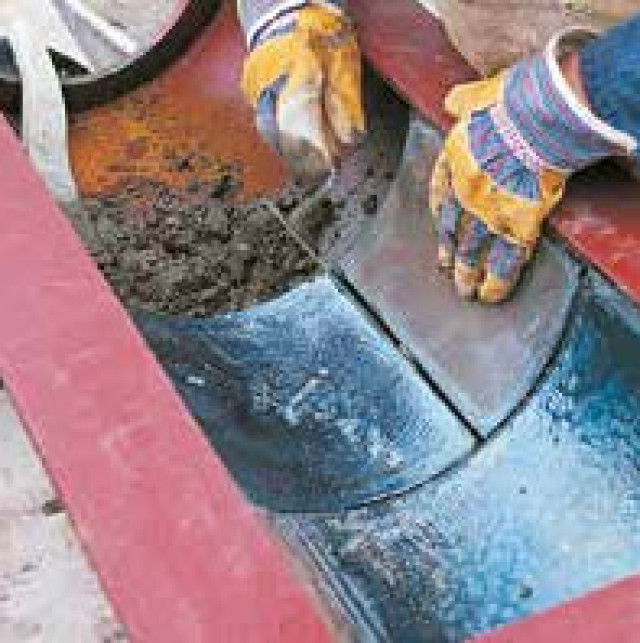
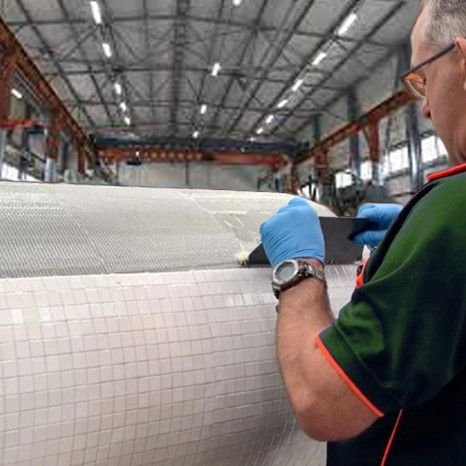
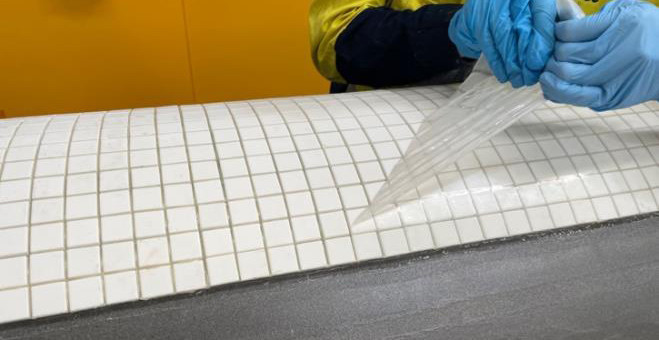
This two-component adhesive mix based on potassium and sodium silicates, ceramic pigments, and zirconium and aluminum oxides is designed for laying acid-resistant bricks and tiles and sealing their joints, as well as for lining industrial floors, channels and foundations. It is used to lay ceramic, diabase and acid-resistant tiles on concrete, metal and polymer substrates.
2. Physical properties
| Parameter | Value |
| Structure | Two-component adhesive with high-strength solid additives and ceramic pigments. Consists exclusively of acid-resistant materials that withstand hydrochloric and sulfuric acids. |
| Density (at 20 °C) | 2.0 g/cm³ |
| Shrinkage | 0.5% |
| Resistance of the compound to sulfuric acid solutions of up to 20%, at least | 97% |
| Resistance of the compound to hydrochloric acid solutions of up to 20%, at least | 90% |
| Abrasion resistance to DIN 52108 | 0.55 mm |
| Compressive strength, at least | 15 MPa |
| Modulus of elasticity | 8000 MPa |
| Adhesion to ceramic tiles, at least | 0.4 MPa |
| Linear shrinkage | 1.0% |
| Maximum service temperature | 900 °C |
3. Chemical resistance
ULTRAMIX MX adhesive is resistant to all acids and to compounds with an acidic hydrolysis reaction, as well as to continuous and alternating chemical and thermal exposure, owing to its content of zirconium and aluminum oxides, natural diabase and special chemically resistant additives.
4. Storage
In a dry, frost-free room at 20 °C: 12 months.
Key advantages
- Two-component adhesive based on potassium and sodium silicates with zirconium and aluminum oxides
- Resistant to 20% sulfuric acid (at least 97%) and hydrochloric acid (at least 90%) solutions
- Maximum service temperature up to 900 °C
- Compressive strength of at least 15 MPa, adhesion to ceramic tiles of at least 0.4 MPa
- For laying acid-resistant bricks, diabase and ceramic tiles on concrete, metal and polymer substrates
Applications
ULTRAMIX MX is used in chemically aggressive environments: for acid-resistant lining of industrial floors, channels, sumps and foundations, lining of tanks and laying of acid-resistant bricks. Its resistance to sulfuric and hydrochloric acids and a service temperature of up to 900 °C allow the compound to be used in the chemical, metallurgical and power generation industries.
Application
Industries
Frequently asked questions
For laying acid-resistant bricks and tiles and sealing their joints, lining industrial floors, channels and foundations, and laying ceramic and diabase tiles on concrete, metal and polymer substrates.
The maximum service temperature is up to 900 °C.
Yes: its resistance to 20% sulfuric acid solution is at least 97%, and to 20% hydrochloric acid solution at least 90%.
Compressive strength is at least 15 MPa; adhesion to ceramic tiles is at least 0.4 MPa.
It is a two-component adhesive mix based on potassium and sodium silicates, ceramic pigments, and zirconium and aluminum oxides.